At GitHub, our mission has always been to innovate ahead of the curve and give developers everything they need to be happier and more productive in a world powered by software. When we began experimenting with large language models several years ago, it quickly became clear that generative AI represents the future of software development. We partnered with OpenAI to create
GitHub Copilot
, the world’s first at-scale generative AI development tool made with OpenAI’s Codex model, a descendent of GPT-3.
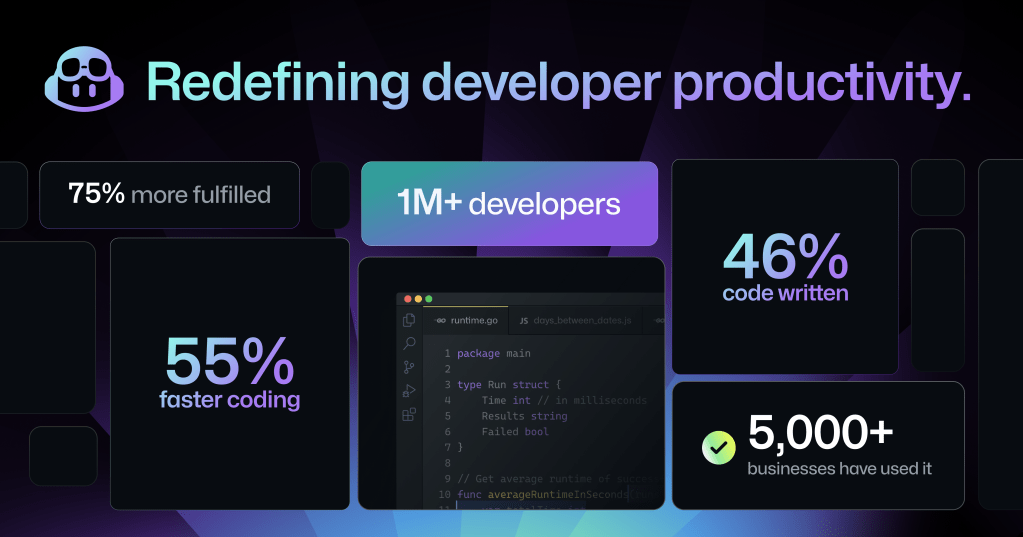
GitHub Copilot started a new age of software development as an AI pair programmer that keeps developers in the flow by auto-completing comments and code. And less than two years since its launch, GitHub Copilot is already
writing 46% of code
and helps
developers code up to 55% faster
.
But AI-powered auto-completion is just the starting point.
Our R&D team at
GitHub Next
has been working to move past the editor and evolve GitHub Copilot into a readily accessible AI assistant throughout the entire development lifecycle. This is
GitHub Copilot X
—our vision for the future of AI-powered software development. We are not only adopting OpenAI’s new GPT-4 model, but are introducing chat and voice for Copilot, and bringing Copilot to pull requests, the command line, and docs to answer questions on your projects.
With AI available at every step, we can fundamentally redefine developer productivity. We are reducing boilerplate and manual tasks and making complex work easier across the developer lifecycle. By doing so, we’re enabling every developer to focus all their creativity on the big picture: building the innovation of tomorrow and accelerating human progress, today.
Let’s jump in.
Want to see what’s new?
Discover GitHub Copilot X—our vision for the future of AI-powered software development.
Learn more >
Many developers and companies have already used GitHub Copilot, and it’s helping improve productivity and happiness.
Copilot for Pull Requests:
You can now sign up for a technical preview of
the first AI-generated descriptions for pull requests on GitHub
. This new functionality is powered by OpenAI’s new GPT-4 model and adds support for AI-powered tags in pull request descriptions through a GitHub app that organization admins and individual repository owners can install. These tags are automatically filled out by GitHub Copilot based on the changed code. Developers can then review or modify the suggested description.
This complements our efforts with GitHub Copilot Chat where developers can ask GitHub Copilot to generate tests right from their editor—so, in the event a developer may not have sufficient test coverage, GitHub Copilot will alert them once they submit a pull request. It will also help project owners to set policies around testing, while supporting developers to meet these policies.
Get AI-generated answers about documentation:
We are launching GitHub Copilot for Docs, an experimental tool that uses a chat interface to provide users with AI-generated responses to questions about documentation—including questions developers have about the languages, frameworks, and technologies they’re using. We’re starting with documentation for
React
,
Azure Docs
, and
MDN
, so we can learn and iterate quickly with the developers and users of these projects.
We’re also working to bring this functionality to any organization’s repositories and internal documentation
—so any developer can ask questions via a ChatGPT-like interface about documentation, idiomatic code, or in-house software in their organization and get instant answers.
We know that the benefits of a conversational interface are immense, and we are working to enable semantic understanding of the entirety of GitHub across public and private knowledge bases to better personalize GitHub Copilot’s answers for organizations, teams, companies, and individual developers alike based on their codebase and documentation.
Moving forward, we are exploring the best ways to index resources beyond documentation such as issues, pull requests, discussions, and wikis to give developers everything they need to answer technical questions.