Note: The
1963
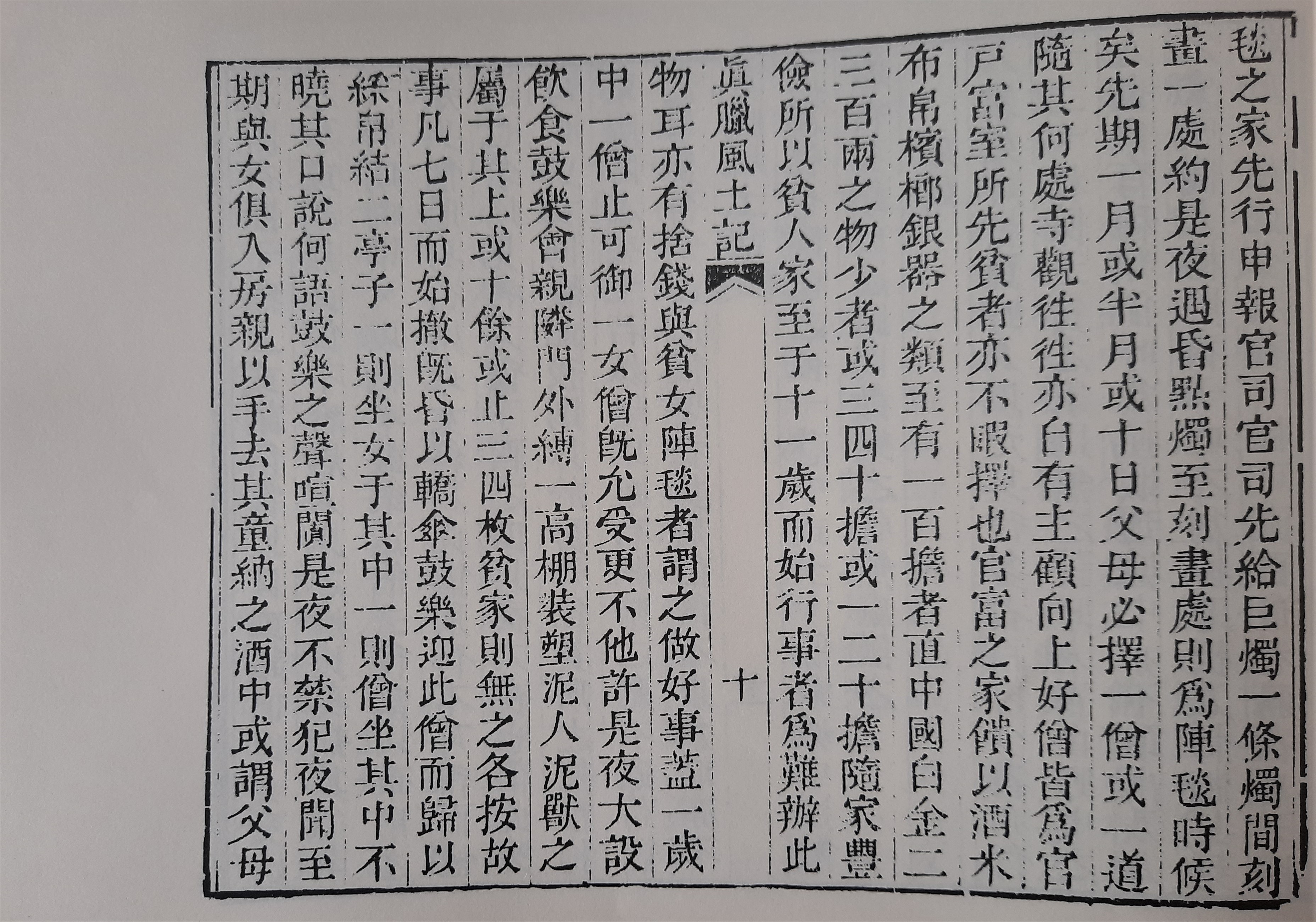
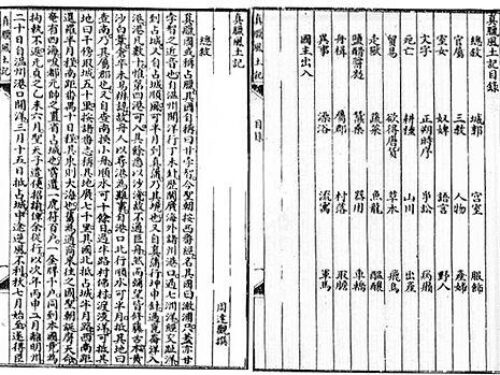
edition was implemented by the Wenzhou Museum, Zhou Daguan’s homeland.
Tags:
Chinese chronicles,
Chenla,
Kampuchea,
history,
Zhou Daguan
About the Author
Zhou Daguan
Zhou Daguan
(also
Tcheou Ta-Kouan, Zhu Daguan)
ch
周达观
, kh
ជីវតាក្វាន់
(
chiv takvan
), vn Chu Đạt Quan, th โจวต้ากวาน (
cho wta kwan
)(c.
1270
, Yongjia (modern Wenzhou) – ? shortly after
1346
), a Chinese traveler under the Temür Khan (Emperor Chengzong), authored the sole written and direct account of the customs of Cambodia and the Angkorean power from the
13
th
century that has been preserved to our days.
Instructed to join an imperial mission to Chenla in
1295
, he arrived at Angkor in August
1296
and stayed near the court of King Indravarman
III
(also named Sri Srindarvarman) until July
1297
. We know only a third of his account,
The Customs of Cambodia
(真臘風土記,
Zhēnlà Fēngtǔ Jì,
literally
The Land and Social Conditions of Chenla
), first translated into French by the sinologist
Jean-Pierre Abel-Rémusat
in
1819
(
Description du royaume de Cambodge par un voyageur chinois qui a visité cette contrée à la fin du
XIII
siècle, précédée d’une notice chronologique sur ce même pays, extraite des Annales de la Chine
, Paris, Imprimerie J. Smith,
1819
), and later on by
Paul Pelliot
in
1902
(
1
) and posthumously in the
1951
edition edited by George Coedes and Paul Demieville. In
2007
, the linguist
Peter Harris
completed the first direct translation from Chinese to modern English.
Coincidentally, Zhou Daguan’s travel to Angkor occurred the same year than
“
the trader and adventurer Marco Polo arrived back in Venice after twenty-five years’ absence. Legend has it that he was full of stories about his travels in China and other parts of Asia, and about the services he provided to the great khan Khubilai, the founding emperor of the Mongol dynasty then ruling China. That same year,
1295
, a young man by the name of Zhou Daguan set sail from Mingzhou, a port on the southeast coast of China. Zhou was headed for Cambodia as part of a delegation sent there by Khubilai’s grandson Temür, who had come to the imperial throne on the death of his grandfather.” (cf. Peter Harris,
A Record of Cambodia
, p
6
).
We still have to conjecture in which capacity Zhou Daguan joined the delegation, but we know he was not a diplomat acting for the Yuan dynasty, nor a trader. The
“
Summary of the General Catalogue of the Complete Library of the Four Treasures” of the Qing Dynasty, praising the book as
“
quite comprehensive and rich in meaning, with many details, which can make up for the missing parts of the Yuan History,” mentions its author as a
“
lettered man.”
As for the name Daguan
达观
, which he used after his trip to Chenla, several interpretations have been given:
“
the one who saw everything”,
“
at ease in every circumstance”,
“
who sees the bright side of everything”.
Sinologist and Khmerologist
Pascal Médeville
is currently working on a novelized account of Zhou Daguan’s life and travels. And in December
2024
, Princess Buppha Devi Dance School presented in Phnom Penh the first musical and dance production inspired by the journey of Zhou Daguan,
លោក ជីវ តាក្វាន់ បានជួបនគរចេនឡា Zhou Daguan in the Kingdom of Chenla
.
Vietnamese
:
Chu Đạt Quan, Chân Lạp phong thổ ký
[
Zhou Daguan
,
Chenla Land and People
], tr. Lê Hương, Saigon, Kỷ Nguyên Mới Pub., Saigon,
1973
[
excerpts in Vietnamese here
].
Spanish
:
Vida y costumbres de Camboya, Relato del viaje de Zhou Daguan a Angkor
, by Astrid Haardt, CreateSpace Independent Publishing Platform,
2013
,
108
p.,
ISBN
13
978
–
1478384496
.
The Customs of Cambodia,
excerpt
.
(
1
) In Antoine Brébion’s Dictionnaire Bibliographique, the entry
Tcheou-Ta-Kouan
states:
‘
Lettré chinois du XIIIe siècle de notre ère, qui avait pour appellation Ts’ao-T’ING; il était originaire de Yong-Kia au Tchô-Kiang, il suivit l’ambassade chinoise envoyée au Cambodge en
1295
, il revint en Chine en
1297
. Le très érudit sinologue qu’est M. P.
PELLIOT
, de l’Ecole française d’Extreme-Orient, lui a restitué la paternité d’une relation intitulée Description du Cambodge, qu’ABEL
DE
RÉMUSAT
avait attribuée à
MA-TOUAN-LIN
.’ [Chinese erudite from the
13
th
century
CE
, who was named Tsao-Ting, hailing from Yong-Kia in Tcho-Kiang. He followed the Chinese embassy sent to Cambodia in
1295
, traveling back to China in
1297
. The most learned sinologist Mr P.
PELLIOT
, from
EFEO
, has given back to him the autorship of a text titled
‘
Description of Cambodia’, previously attributed to
MA-TOUAN-LIN
by
ABEL
DE
RÉMUSAT
.]
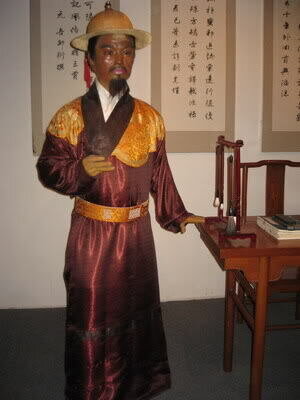
A wax statue of Zhou Daguan at Cambodian Cultural Village, Siem Reap (source: km.wikipedia.org)